
ADRIANA LECOUVREUR
Francesco Cilea 1866-1950
An opera in four acts.
Libretto by Arturo Colautti, based upon the theatre play
Adrienne Lecouvreur by Eugène Scribe and Ernest Legouvé
Premiere, 6 November 1902
Teatro Lírico, Milano
Adriana Lecouvreur, or the Theatre as Battlefield
Beneath the surface of eighteenth-century luxury lies a devastating conflict of status. Adriana is a celebrated actress who, from within a profession historically looked down upon, dares to compete in love with the Princess of Bouillon, an untouchable aristocrat protected by the laws of the ancien régime. This confrontation transforms Adriana Lecouvreur into something greater than a verismo tragedy of love and jealousy, elevating it into a chronicle of the clash between an old world unwilling to die and the emergence of a new individual dignity founded upon profession and feeling rather than title. The theatre stage itself becomes the decisive battleground where Adriana publicly humiliates the Princess by hurling verses about adultery in her face. It is the sole moment in which hierarchy is reversed, and the actress dominates the noblewoman in an act of rebellion that seals her tragic fate. Her death arrives through the scent of withered violets sent by the Princess; it is the ultimate metaphor for the fragility of the artist confronted by the machinery of power.
The elegant and passionate verismo of Adriana Lecouvreur arrives at Les Arts under the guidance of that great creator of dreams, stage director Vincent Boussard. As you may know, it is impossible to forget his Giulio Cesare in Egitto, which bewitched us all. In Adriana Lecouvreur, the French director binds together the opera’s intricate dramaturgy through the suggestive visual beauty of set and costume design without distorting the original dramatic context, focusing instead on the psychology of the central triangle. Premiered during the Riga Opera Festival 2023, the Valencia production stars soprano Ermonela Jaho, admired for her expressive artistry and regarded as a leading verismo interpreter. Her stage partner is tenor Charles Castronovo (Maurizio), whom we previously welcomed in Manon, joined by the imposing voices of Roberto Frontali and Clémentine Margaine as the scheming Princess, a large voice of impressive dark colour and dramatic temperament. Returning to Valencia is one of the city’s most acclaimed conductors, Maurizio Benini, a master of elegance and a baton of exceptional versatility, always attentive to the smallest detail of the score.
Cor de la Generalitat Valenciana
Chorus master, Jordi Blanch Tordera
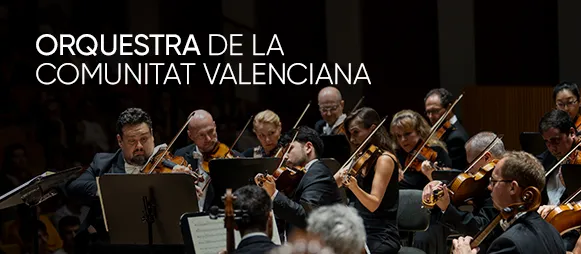
Orquestra de la Comunitat Valenciana
A production from Latvian National Opera
Calendar and sessions



