


The Palau de les Arts immerses itself in the Russia of the tsars with Mussorgsky's Boris Godunov
24.10.2011
•The filmmaker Andrei Konchalovsky is the author of the staging of this co-production with the opera houses of Turin and Bari.
Valencia (October 24, 2011) – The Palau de les Arts Reina Sofía is currently hosting rehearsals for Modest Mussorgsky's Boris Godunov, the opening opera of the 2011-2012 season, which will premiere on November 5. Five additional performances are scheduled for November 8, 11, 16, 20, and 23.
The Russian composer's masterpiece is being presented in Valencia in a new production directed by Andrei Konchalovsky. The Slavic director, who is also responsible for the lighting, has collaborated with set designer Graziano Gregori and costume designer Carla Teti.
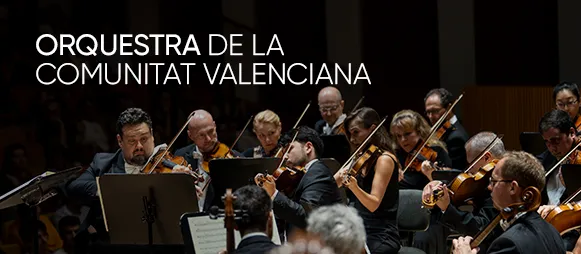
Omer Meir Wellber makes his debut in the pit as musical director of the Orquestra de la Comunitat Valenciana with this co-production of the arts center with the Teatro Regio di Torino and the Fondazione Lirico Sinfonica Petruzzelli e Teatri di Bari. This is the second work of the Slavic repertoire that the Israeli directs in Valencia after the success of Yevgeny Onegin last season.
Bass Orlin Anastassov leads the cast of this production, which also includes Nikolai Schukoff, Alexander Morozov, Konstantin Pluzhnikov, Vladimir Matorin, Andrei Zorin, and Alexander Guergalov, among others. The Cor de la Generalitat Valenciana, Escolania de la Mare de Déu dels Desemparats, and Pequeños Cantores de Valencia join the team finalizing preparations at the Palau de les Arts for the premiere of Boris Godunov on November 5th.
Modest Mussorgsky wrote the score and libretto for Boris Godunov in just fourteen months, between October 1868 and December 1869. The composer based it on Alexander Pushkin's work of the same name and the tenth and eleventh volumes of Nikolai Karamzin's History of the Russian Empire .
Boris Godunov is a portrait of the Time of Troubles, one of the most turbulent periods in Russian history, encompassing the fierce struggle for the throne after the death of Ivan the Terrible and the rise and reign of Tsar Boris Godunov in the second half of the 16th century. Mussorgsky places the Russian people at the heart of the opera, gripped by hunger and misery and torn between the desire for rebellion and the fear of the regime. This situation is contrasted by the composer with the personal tragedy of Boris, who, consumed by the murder of the legitimate heir, descends into utter madness.
Since the first version of Boris Godunov , dated 1869, numerous modifications have been made to this masterpiece of the Russian repertoire. Mussorgsky revised the opera and produced a version in 1872 with three new scenes, two of which constitute the 'Polish Act,' in addition to making other modifications to the score. This was the first version to premiere in St. Petersburg in 1874. To these two original versions by the composer, we can add the later adaptations by Nikolai Rimsky-Korsakov and Dmitri Shostakovich.
The Palau de les Arts presents the original 1869 version, to which, for dramatic reasons, a scene introduced by Mussorgsky in the second variation he made in 1872 has been added: the Kromi forest scene.
Andrei Konchalovsky joins the roster of prestigious filmmakers that the arts center has enlisted for its new productions, following in the footsteps of Carlos Saura, Chen Kaige, and Werner Herzog. The Slavic filmmaker, an Emmy Award winner, has garnered acclaim at the most prestigious festivals, including Cannes, Berlin, Venice, and San Sebastián. A disciple of Andrei Tarkovsky and a collaborator of Akira Kurosawa, Konchalovsky has developed his prolific career in both Europe and the United States, where he has directed notable box-office hits such as Tango & Cash, starring Sylvester Stallone and Kurt Russell. Among his operatic productions, his colossal War and Peace by Prokofiev for the Mariinsky Theatre in St. Petersburg and the Metropolitan Opera in New York stands out.
The role of Tsar Boris, which has been performed by some of the most distinguished basses in history, falls to Orlin Anastassov. The Bulgarian bass, winner of Operalia in 1999, has sung in Valencia in Don Carlo and Luisa Miller . Alongside him is Nikolai Schukoff in the role of Grigori (a false Dmitri). The Austrian tenor, who sang Narraboth in Salome during the 3rd Festival del Mediterrani, will later return to Valencia to participate in the concert version of Ariadne auf Naxos under the baton of Riccardo Chailly. Alexander Morozov embodies the elderly monk Pimen, a role he has already performed successfully at the Mariinsky Theatre in St. Petersburg. The bass, a member of Valery Gergiev's company since 1984, has been in demand at theaters such as the Metropolitan Opera in New York, Covent Garden in London, and the Bastille in Paris.
For the role of Prince Vasily Shuysky, the arts center has secured two tenors: Konstantin Pluzhnikov and the veteran Dutch tenor Arnold Bezuyen, who will take to the stage in the Main Hall for the performances on November 20 and 23. Vladimir Matorin returns to Valencia after his work in *Esponsales en el monasterio* and *La novia venden*. The Moscow bass, one of the most sought-after in his register, reprises his role as the monk Varlaam following his successful performance in the Turin premiere of this production. Tenor Andrei Zorin (*El demente*) completes the list of leading singers. Together with them, the cast of this work is completed by: Emilio Sánchez (Misail), Alexánder Guergálov (Andréi Schelkálov), Nadezhda Serdiuk (Owner of the inn), Ilona Mataradze (Xenia), Nadezhda Vasílieva (Xenia's nurse), Iván Khudyakov (Fiódor), Leonard Bernard (Mitiuja), Grigori Karasiov (Mikítich), Jesús Álvarez (valid boyar), Ventseslav Anastasov (Levitsky), Aldo Heo (Chernikovski) and Mario Cerdá (Khrushchev).

