

The Palau de les Arts hosts the final rehearsals of Rossini's L'italiana in Algeri
17.02.2014
– Ottavio Dantone takes over the musical direction of this work, which is presented in a production by Joan Font, of Comediants
– Burak Bilgili (February 23 and 26 and March 1), Simón Orfila (March 11 and 13) and Ricardo Seguel (March 15) play Mustafà.
– The cast includes Silvia Tro Santafé from Valencia (Isabella), and the Italians Antonino Siragusa (Lindoro) and Giulio Mastrototaro (Taddeo)
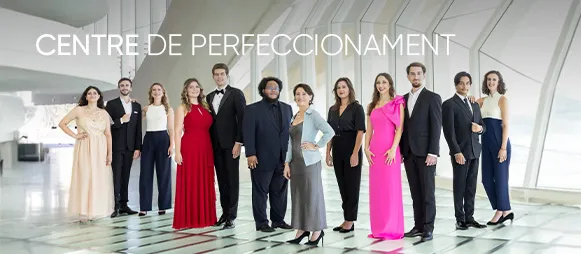
– Participating artists from the Centre de Perfeccionament Plácido Domingo are Anabel Pérez Real (Elvira), Cristina Alunno (Zulma) and Germán Olvera (Haly)
Valencia. The Palau de les Arts Reina Sofía is hosting this week the final rehearsals of L'italiana in Algeri , by Gioachino Rossini, the opera with which the Palau reopens its doors this Sunday, February 23, at 7:00 p.m.
The Valencian arts center is programming this two-act dramma giocoso , with a libretto by Angelo Anelli, for the second time in its history, following the excellent reception it received in 2010. L'italiana in Algeri was the second opera performed by the Centre de Perfeccionament Plácido Domingo, in a production that featured Damiano Michieletto as stage director and Maestro Alberto Zedda on the podium.
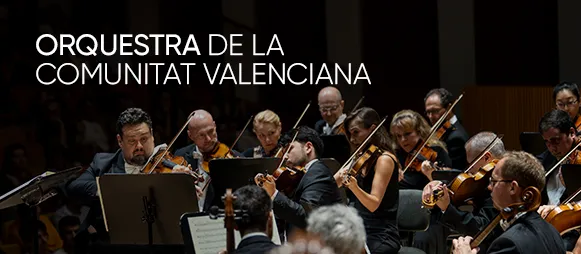
Ottavio Dantone conducts the Rossini opera. The Italian maestro, principal conductor of the Accademia Bizantina in Ravenna, takes on this responsibility for the fourth time at the Palau de les Arts, following his work with the Orquestra de la Comunitat Valenciana on Vicente Martín i Soler's L'isola del piacere , Philistaei a Jonatha dispersi and Una cosa rara , as well as Mozart's Die Zauberflöte last season.
Joan Font, from the Comediants theatre group, makes his debut in Valencian opera with this colorful and hilarious production, featuring set and costume design by Joan Guillén, lighting by Albert Faura, and choreography by Xevi Dorca. L'italiana in Algeri is a co-production of the Teatro Real in Madrid, the Maggio Musicale Fiorentino, the Houston Grand Opera, and the Grand Théâtre de Bordeaux.
The Palau de les Arts has assembled a cast that combines established performers of the Rossini repertoire with new talents from the operatic scene, including artists from the Centre de Perfeccionament Plácido Domingo.
Three singers, performing for the first time before the Valencian public, bring to life Mustafà, Bey of Algiers, in the six performances hosted by the opera center: the Turk Burak Bilgili (February 23, 26 and March 1), the Menorcan Simón Orfila (March 11, 13) and the Chilean Ricardo Seguel (March 15).
Burak Birgili, who has enjoyed an international career since his debut at La Scala in Milan in 2002, has performed at major opera houses in the United States and Canada, including the Metropolitan Opera and the New York City Opera. In Europe, the Turkish bass has performed at the Maggio Musicale Fiorentino under the baton of Zubin Mehta and at the Grand Théâtre de Genève in Switzerland.
Simón Orfila, who has collaborated with such renowned figures as José Carreras, Alfredo Kraus, and Mstislav Rostropovich, boasts an extensive repertoire with engagements in major European opera houses including Berlin, Florence, Rome, Milan, and Vienna. The Menorcan baritone has also participated in numerous CD and DVD recordings.
Ricardo Seguel sings the final performance of this opera. Since his debut at the Municipal Theatre of Santiago, Chile, in 2001, he has become one of the company's leading performers. In Spain, the Chilean bass-baritone has sung in the ABAO season in Bilbao and at the Campoamor Theatre in Oviedo.
Silvia Tro Santafé sings the role of Isabella. A recipient of numerous awards, the Valencian mezzo-soprano is considered one of the leading interpreters of the Handel and Rossini repertoires. In demand by major European opera houses and festivals, including La Scala in Milan, the Vienna State Opera, and the Salzburg Festival, she has also performed in Washington, Beijing, and Tokyo. The Valencian diva has also worked with some of the most prestigious conductors, such as William Christie, René Jacobs, Lorin Maazel, Neville Marriner, Yehudi Menudin, and Alberto Zedda, among others. She sang in Handel's Orlando at the Palau de les Arts in 2007.
For the role of Lindoro, the Palau de les Arts has enlisted tenor Antonino Siragusa, one of the leading figures in the bel canto world. A regular performer in major opera houses such as Berlin, Milan, New York, Paris, Vienna, and Zurich, the Sicilian tenor is a frequent member of the casts at the Rossini Opera Festival in Pesaro. Throughout his rising career, he has worked with renowned conductors such as Daniele Gatti, Valery Gergiev, Riccardo Muti, Daniel Oren, and Alberto Zedda, among others.
The young Italian singer Giulio Mastrototaro embodies Taddeo. With a solid background in the Italian repertoire, the baritone has collaborated with conductors such as Dmitri and Vladimir Jurowski, Riccado Muti, and Alberto Zedda. He has sung in the leading theaters and festivals of Italy, as well as at prestigious operatic events such as the Begrenz and Salzburg festivals.
The cast of L'italiana in Algeri is completed with the artists of the Center de Perfection Plácido Domingo Anabel Pérez Real (Elvira), Cristina Alunno (Zulma) and Germán Olvera (Haly), the voices of the Cor de la Generalitat Valenciana and the Ballet de la Generalitat.
The Palau de les Arts has scheduled six performances of this work on February 23 and 26, as well as March 1, 11, 13 and 15.
L'italiana in Algeri
L'italiana in Algeri marks a turning point in Gioachino Rossini's vast output. With this work, the genius from Pesaro delves into the comic opera subgenre and begins to breathe new life into 19th-century comic opera.
Rossini composed L'italiana in Algeri in just 27 days as a commission to salvage the poor start of the season at the Teatro San Benedetto in Venice in 1813. The genius from Pesaro based his work on a libretto by Angelo Anelli, written for a comic opera by the composer Luigi Mosca. The composer removed the more sentimental passages to create this hilarious and unrestrained 'dramma giocoso' that captivated audiences from its very premiere.
The score, brimming with dynamism and freshness, astonishes with its frenetic rhythm, the impetuous explosion of the concerted sections, and the richness of the instrumentation. These and other innovative compositional techniques that the young musician began to develop in opera buffa would culminate in later works such as Il turco in Italia (1814), Il barbiere di Siviglia (1816), and La Cenerentola (1817).
Synopsis
In the opera, the action takes place in Algiers. Mustafà, the Bey (governor) of Algiers, can no longer tolerate his wife, Elvira, and orders his captain to find him an Italian wife. A storm washes ashore a ship carrying the young Italian woman Isabella, who is searching for her fiancé, Lindoro, kidnapped by corsairs. When the girl is presented to Mustafà, she discovers that Lindoro is serving as the Bey's slave. He is captivated by the Italian woman's beauty and begins to court her. Isabella feigns flattery at such grotesque gallantry in order to mock him and devise a plan to elope with Lindoro. To achieve her goal, she names Mustafà her "Pappataci" and implies that this title is held in Italy by "those who are never offended by the fair sex." The Bey, delighted, submits to the ceremony, which consists of eating and drinking merrily, oblivious to everything happening around them. Isabella, Lindoro, and their friends take advantage of this situation to set sail for Italy. When the naive Mustafa realizes he has been tricked, he resignedly seeks refuge in the arms of his wife, Elvira.

