


The Palau de les Arts revives the lyrical version of ‘La Malquerida’ and imbues it with Mexican flavor
09.04.2019
If there is one author who revolutionized Spanish-language theater, it is Jacinto Benavente. The playwright demonstrated his Nobel Prize-winning talent with works steeped in the imagery of Wilde. His dynamic dialogue and his ability to perfectly blend the nuances of social satire showcase his skill. These qualities are reflected in his best-known play, Los intereses creados (The Bonds of Interest ), but also in the rural drama La Malquerida (The Unloved Woman ).
This work is so thrilling and wild that Maestro Manuel Penella seized upon it. He set it to music and transformed it into a lyrical drama, the original score of which is preserved at the SGAE (Spanish Society of Authors and Publishers). Its premiere, on April 12, 1935, at the Victoria Theatre in Barcelona, garnered critical and popular acclaim. Now, the Palau de les Arts is reviving the Valencian composer's libretto in a co-production with the Teatros del Canal . This striking revival comes to the Martín i Soler Theatre (April 11-18). All this to pay tribute to a chameleon-like and modern conductor for his time.
To fully immerse ourselves in the lyrical intensity of its score, it is essential to understand the characters and the plot. Deciphering every detail of this production requires uncovering its background. So, let's look back to contextualize Les Arts' proposal for this latest work by Penella. The first stop must be 1913, the year in which Jacinto Benavente shaped the original story .
The tragedies and misadventures of Raimunda and Acacia
"He who loves the woman from Soto / suffers a sorrowful life / for loving her, he who loves her / calls her the unloved one." This verse, without music, already appears in Jacinto Benavente's text. It refers to Acacia, Raimunda's daughter, and summarizes the drama that the search for truth can entail. This quest will lead the protagonist and her family to ruin. The Madrid playwright illustrated this devastation in the classical style in which Oedipus Rex had been performed . The antecedents of one of Lorca's most acclaimed works are also perceptible in its form: The House of Bernarda Alba .
Premarital murder
The author had already flirted with the theme of female domination by dim-witted men in his 1908 novel, Señora Ama , five years before returning to this subject. In this particular case, Benavente recreates this believable, natural, and realistic portrait on a hacienda called El Soto. There, Acacia and Raimunda live; Raimunda is about to remarry Esteban. Acacia herself is also about to get married. But her fiancé, Faustino, is murdered the day before the wedding .
An incestuous passion
That's when Raimunda takes charge of the investigation. Suspicion falls on Norberto, the young woman's ex-boyfriend, but the mother isn't swayed by the evidence. And she has good reason to be. Esteban is obsessed with his stepdaughter , an incestuous passion that drives him to stalk all her conquests. His jealousy leads him to commit atrocities with the complicity of El Rubio, another character in this story.
The premiere at the Princess Theatre
At first, Acacia rejects her stepfather in front of the entire town, but she will eventually confess her love for him. They both hide their feelings with hostility until everything is revealed. Raimunda's reaction is one of the high points of a play that premiered in 1913 at the Teatro de la Princesa in Madrid, starring María Guerrero (Raimunda) and María Fernanda Ladrón de Guevara (Acacia). Thus began, with undeniable success, the consecration of this theatrical work.
Manuel Penella's Bet
That popular acclaim did not go unnoticed by Penella. The maestro, responsible for such unmistakable operas as Don Gil de Alcalá and the heart-wrenching El gato montés , played it safe. He decided to set Benavente's brilliant creation to music two decades after its premiere. He shortened some scenes and incorporated musical numbers where necessary. His libretto received the approval of the author of the original work. In fact, they shared the rights to this adaptation equally.
Among choirs, mountain songs, street parades and folk songs
Jacinto Benavente witnessed the transformation of his novel, Malquerida , into a work of art. He attended its premiere on the Catalan stage. There, he heard Esteban perform the serranilla and applauded the duet between the stepfather and Raimunda. Raimunda delivered a Puccini-esque prayer during a performance that also featured a chorus. And, of course, the aforementioned copla was prominently featured in the production.
The path that awaited this lyrical drama
Manuel Penella breathed new life into the original work with fourteen successful musical numbers . That debut paved the way to glory. In fact, the Victoria Theatre company, led by Pablo Gorgé and Matilde Martín, embarked on a tour of the Levante region. Shortly afterward, the Spanish Civil War broke out. What happened then to the maestro's repertoire? The musician traveled with it to Argentina and Mexico , the country where he died.
Mariachis by rondallas
The Valencian composer died in 1939, during his exile, at only 58 years old. A decade after his death, Emilio Fernández directed the film version of Penella's La Malquerida . Mexican cinemas featured mariachi performances instead of the rondalla ensemble included in the score.
Undoubtedly, this rural yet universal story left an indelible mark on Mexico. Its popularity was so great that it endured well into this century. Thus, in 2014, a telenovela based on Benavente's work premiered. This is yet another example of the undeniable influence of this playwright across the globe. His modernist theater is recognized in directors like Arthur Miller . One need only watch his A View from the Bridge (1955).
This is the production that is coming to the Palau de Les Arts
Penella's connection to Mexico served as inspiration for *La Malquerida* , which we will see in Valencia. In fact, the action in this case will take place on a Mexican hacienda . The setting is based on the Golden Age of Mexican cinema. These screenings will not lack doses of humor, nor the aforementioned mariachis. Furthermore, the production, directed by Emilio López and conducted by Santiago Serrate , It demonstrates the theatricality of the composer's work.
No sound recordings of this dramatic score exist, as Penella did not record any fragments . But it is clear that the Valencian composer musicalized every gesture. For example, the stepfather's cry is written in the pizzicato string section.
The cast
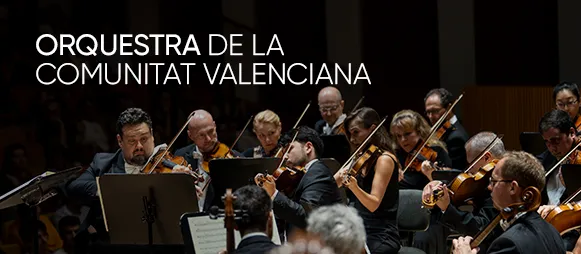
Sandra Ferrández (Raimunda), María Caballero (Acacia), César Méndez (Esteban), and Vicent Romero (Norberto) lend their voices to the main characters. The production also features the Orquestra de la Comunitat Valenciana, the Cor de la Generalitat Valenciana, and the Mariachi Sol del Mediterráneo company. Gabriela Salaverri is responsible for the actors' costumes. The set design is by Nathalie Deanna.
Valencian actors linked to 'La Malquerida'
We mentioned earlier that María Fernanda Ladrón de Guevara played Acacia in the original cast. The Madrid native, who was 15 at the time, later appeared alongside several Valencian actors in subsequent productions. For example, in Gregorio Martínez Sierra's * Mamá *, she shared the stage with Luis Medrano. She also acted with Emilio Valentí in another Benavente play, * La vestal de Occidente *, and with Felipe Carsi in Muñoz Seca's * El último pecado* .
Ladrón de Guevara eventually married another Valencian actor, Rafael Rivelles . From this first marriage was born Amparo Rivelles , who went on to perform in the same Benavente play as her mother: Campo de armiño (Field of Ermine ). Her next marriage was to the theatrical impresario Pedro Larrañaga . They were the parents of Carlos Larrañaga , who married María Luisa Merlo, also from Valencia. This well-known actress is the daughter of Ismael Merlo , also from Valencia, who was the grandfather of Amparo Larrañaga and Luis Merlo . Without a doubt, this is one of the most representative dynasties of actors and actresses in Spanish theater.
Art was also passed down from generation to generation in the case of Manuel Penella himself. We mustn't forget his three granddaughters, the actresses Emma Penella, Terele Pávez, and Elisa Montes . The latter married the Valencian actor Antonio Ozores , with whom she had another daughter, also an actress, Emma Ozores. The middle of Penella's granddaughters paid homage to her grandfather in her stage name. "Montes" was a reference to his famous three-act opera , El gato montés (The Wildcat ).
The revival of the musical version of La Malquerida is a must-see for opera lovers. But also for those who love dramatic and comedic theater. The Palau de les Arts Reina Sofía's production takes it a step further. It elevates the experience by placing Benavente and Penella among mariachis .
Image source: © Wounds_and_Cracks

