


Les Arts opens the 2019-2020 season with 'Le nozze di Figaro', by Mozart
24.09.2019
The Palau de les Arts opens the 2019-2020 season on Friday, September 27, with the premiere in the Main Hall of 'Le nozze di Figaro' by Mozart.
The artistic director of Les Arts, Jesús Iglesias Noriega, presented this production at a press conference accompanied by its musical director, the British Christopher Moulds, as well as Emilio Sagi, the creator of the staging.
“Mozart is an essential composer for any theater with an international vocation, and this will be the case at Les Arts starting this season, in which we will be able to hear a work never before performed by our audience, 'La finta giardiniera,' next November,” Iglesias Noriega pointed out. “He is also an indispensable composer in our commitment to cultivating new audiences. That is why 'Le nozze di Figaro' is one of the works that Les Arts has programmed with affordable prices, between 18 and 60 euros, but with the same artistic quality as the rest of the season's offerings,” he added.
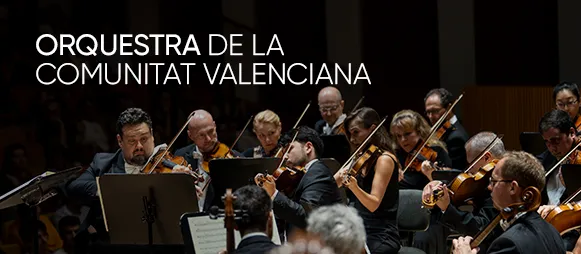
Christopher Moulds, internationally recognized for his work in Baroque and Classical music, makes his debut with the Cor de la Generalitat and the Orquestra de la Comunitat Valenciana.
The British maestro, who has had words of praise for the theater's resident ensembles, has worked from the perspective of chamber music to extract a more classical sound from the OCV, 'a formation of romantic customs', as he has pointed out.
Emilio Sagi directs the staging of 'Le nozze di Figaro', which is a co-production of the Teatro Real in Madrid with the Bilbao Association of Friends of Opera (ABAO) and the Lithuanian National Opera and Ballet Theatre, with set design by Daniel Bianco, costumes by Renata Schussheim, lighting by Eduardo Bravo and choreography by Nuria Castejón.
An essential figure in the history of Les Arts, where he has presented productions such as 'La bruja', 'El rey que rabió', 'El dúo de 'La Africana', 'Katiuska', 'Luisa Fernanda', 'Lucrezia Borgia', 'Tancredi', 'Il mondo della luna' or 'Rigoletto', Sagi faithfully reproduces the sensuality of the city of Seville in the mid-18th century.
The director from Oviedo, who considers 'Le nozze di Figaro' a theatrically perfect piece that allows for alterations, presents a 'hyperrealistic' Mozart, exaggerating the Spanish character of the plot, with elements such as Schussheim's costumes, clearly of Goyaesque style.
Les Arts brings together renowned voices of the Mozartian repertoire in this cast, featuring two of Spain's most internationally acclaimed sopranos, María José Moreno and Sabina Puértolas, in the roles of Countess Almaviva and Susanna, respectively. The arts center also presents Canadian baritone Robert Gleadow, acclaimed by audiences and critics alike as the leading new interpreter of the role of Figaro.
The rising Polish baritone Andrzej Filočczyk, as Count Almaviva, and the outstanding Rossini mezzo-soprano Cecilia Molinari, who sings the naive Cherubino, complete the quintet of protagonists. The production's cast is rounded out by soprano Susana Cordón, bass-baritone Valeriano Lanchas, tenor José Manuel Montero, bass Felipe Bou, and artists from the Centre de Perfeccionament Plácido Domingo: Joel Williams, Vittoriana De Amicis, Aida Gimeno, and Evgeniya Khomutova.
'Le nozze di Figaro' will be performed at Les Arts on September 27 and 29, as well as on October 2, 4 and 6 in the Main Hall.
'The Marriage of Figaro'
'Le nozze di Figaro' is a comic opera in four acts with an Italian libretto by Lorenzo Da Ponte, which was based on the work of Pierre Augustin Caron de Beaumarchais, 'Le mariage de Figaro'.
With this title begins the so-called Mozart-Da Ponte trilogy, which arises as a result of the collaboration of the Salzburg composer with the successful librettist from Treviso, Lorenzo Da Ponte, and to which 'Don Giovanni' and 'Così fan tutte' belong.
Set in the second half of the 18th century, at the residence of a Spanish nobleman in the countryside near Seville, 'Le nozze di Figaro' stages the moral conflict surrounding the feudal right of the first night. In the background, a vivid portrait of daily life unfolds, depicting the lives of serfs, bourgeois, and lords, culminating in a final mockery of the archaic laws that still held sway over the lords.
The work is considered a hymn in favor of a new social order in which the gift of intelligence owes nothing to money or birth, and the value of the working classes is contrasted with the frivolous inaction of the dominant and passive classes. Its premiere took place on May 1, 1786, in Vienna, three years after the outbreak of the French Revolution.

