

Font de Mora: “Les Arts is celebrating Lucrezia Bori, an exceptional and pioneering woman who deserves to regain her place in the history of opera.”
23.12.2022
Les Arts
Font de Mora: “Les Arts is celebrating Lucrezia Bori, an exceptional and pioneering woman who deserves to regain her place in the history of opera.”
- The Board of Trustees agrees that its circle of patronage will be named after the Valencian woman who reigned at the Metropolitan Museum of Art in New York.
- The architect of the campaign that saved the legendary New York company from the 1929 crash, he mobilized the city's elite for those affected by the 1957 Valencia flood.
Valencia (23.12.22). The president of the Board of Trustees of Les Arts, Pablo Font de Mora, has championed the figure of Lucrezia Bori, “an exceptional and pioneering woman who deserves to recover her privileged place in the history of opera and the city of Valencia.”
In this regard, Font de Mora explained that the Board of Trustees of Les Arts agreed, at its last meeting of the year, that the institution's patronage circle will henceforth bear the name of the legendary Valencian soprano Lucrezia Bori (Valencia, 1887 – New York, 1960), on the occasion of the 135th anniversary of her birth.
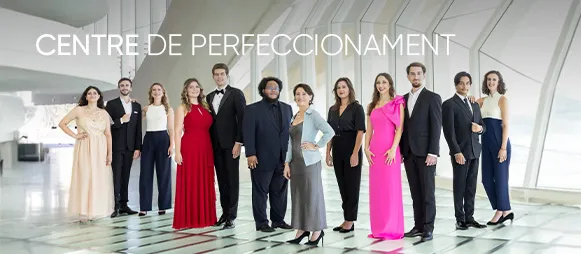
To that effect, Les Arts paid tribute to her today at her tomb located in the Municipal Cemetery of Valencia, with a short piano recital by some artists from the Centre de Perfeccionament, the soprano Rosa Dávila and the pianist José Alberto Sancho, who performed two essential arias from Lucrezia Bori's extensive repertoire: 'Sì, mi chiamano Mimì', from 'La bohème', and 'Porgi amor', from 'Le nozze di Figaro'.
José Doménech Part, critic and biographer of the artist, has pointed out that, despite still being largely unknown to most of the population, “Lucrezia Bori is the most important Spanish singer of the first half of the 20th century, a fascinating woman who aroused the respect and admiration of some of the most relevant figures of the time and who opened the door to a whole generation of Spanish singers in the 50s and 60s.”
She sang at La Scala in Milan under the baton of Tullio Serafin, working with the greatest singers of the time: Enrico Caruso, Beniamino Gigli, Giacomo Lauri-Volpi, Miguel Fleta, Giovanni Martinelli, Lawrence Tibbet, Ezio Pinza, among many others… Giacomo Puccini and Arturo Toscanini themselves chose her to sing 'Manon Lescaut' on the company's European tour, which would mark the beginning of a fruitful and legendary relationship with the temple of American opera, where she debuted two years later at the opening of the 1912-1913 season.
Until her voluntary retirement in 1936, Lucrezia Bori held the title of "first lady" of the New York theater, where she sang in 473 performances, in addition to 155 performances in other cities with the company. Her unforgettable works, Doménech Part recalls, include 'Madama Butterfly', 'La traviata', 'La bohème', 'Don Pasquale', 'Mignon', 'Romeo et Juliette', 'Così fan tutte', 'Les contes d'Hoffmann', 'Manon', 'Faust', 'Manon Lescaut', and 'Pelléas et Mélisande'. Lucrezia Bori was also the first voice to sing in Spanish at the Metropolitan Opera in the premiere of Manuel de Falla's 'La vida breve'.
Beyond her undeniable success, in 1935, the Valencian artist was the first woman and performer to be elected to the Board of Trustees of the Metropolitan Opera, and, once retired from the stage, she was appointed president of the Metropolitan Opera Guild, promoting the historic radio broadcasts of the 'Saturday Matinee Broadcast', which are still being carried out today, as a way of bringing opera to all homes in the United States and Canada and, nowadays, through the Internet, to the whole world.
The Valencian soprano also stood out for her active contribution to philanthropic causes, for which she put at the service both her renowned talent and her impressive contacts, among which are the most powerful dynasties such as the Guggenheim, Rockefeller, Vanderbilt, Astor, the Mellon and the Huntington, among others, as well as personalities such as Eleanor Roosevelt.
Among the numerous charitable initiatives she championed, she is particularly remembered in the Big Apple for the 'Save the Metropolitan' campaign, with which she managed to save the legendary American opera company from bankruptcy after the 1929 stock market crash. But, despite her established career in the United States, Lucrezia Bori never forgot Spain and her native Valencia.
She received the Grand Cross of Alfonso XIII for her contribution to the construction of the University City of Madrid, and, after learning of the effects of the Valencia flood of 1957, she gathered the American elite at the Town Hall of New York in a gala with which she raised 50,000 dollars which she sent to the capital of the Turia and which were destined for the construction of housing for the families affected by the tragedy in the Fontsanta neighborhood, where there is a street dedicated to her name.
Lucrezia Bori Circle
The Lucrezia Bori patronage circle aims to be a meeting point for representatives of the Valencian social, cultural and business fabric within Les Arts' commitment to bringing citizens closer to and raising awareness of its artistic and educational project.
According to Pablo Font de Mora, the board of directors of the circle will be formed next January and will be composed exclusively of patrons of the institution in its different categories of ally, benefactor, protector and great patron.
The Board of Trustees of Les Arts intends, in this way, to advance in the implementation of actions to promote the support of Valencian civil society for the growth and development of the activities of Les Arts, as well as to contribute to the revitalization of the cultural sector in the Valencian Community.

