


Beethoven's Ninth Symphony
01.01.2020
Beethoven's Ninth Symphony is one of the most masterful compositions in the history of classical music and one of the composer's most emblematic works. It is a universally acclaimed symphony that celebrates the brotherhood and fraternity of humankind, and you will soon be able to see it performed live at Les Arts in Valencia under the direction of Vasily Petrenko .
Who composed the Ninth Symphony?
Symphony No. 9 in D minor, Op. 125, "Choral," was composed by Ludwig van Beethoven (1770–1827) between 1822 and 1824. The premiere of this masterpiece took place on May 7, 1824, at the Theater am Kärntnertor in Vienna, under the direction of Michael Umlauf and with Beethoven himself supervising. The premiere marked the composer's return after a ten-year absence from the public eye due to health problems that persisted until his death three years later.
Beethoven's Ode to Joy
Beethoven's Ninth Symphony, also known as the Ode to Joy , was commissioned by the Philharmonic Society of London. The composition is based on Friedrich Schiller's poem "Ode to Joy," published in 1793. Beethoven empathized with the same sentiments expressed by the poet, and this inspired him to begin setting it to music at the age of 23, resulting in one of the most iconic and important symphonies in the history of music.
In 2002, Beethoven's Ninth Symphony was declared a World Heritage Site by UNESCO.
The instruments of Beethoven's Ninth Symphony
The instrumentation in Beethoven's Ninth Symphony is impressively varied and comprehensive. Every section of the orchestra, from the winds to the strings and the choral voices, contributes crucially to creating an astonishing and thrilling musical experience.
The wind instruments, which include flutes, oboes, clarinets, and bassoons, contribute tonal and melodic richness, adding nuances and depth to the music, standing out at key moments in the composition.
The brass instruments, including horns, trumpets, and trombones, add brilliance and power to the sound, contributing to its majesty and grandeur.
The percussion, including timpani, bass drum, triangle, and cymbals, adds a rhythmic and dramatic dimension. The timpani, in particular, provide a significant rhythmic drive, while the cymbals contribute a bright and explosive effect at certain moments, such as the climax of the final movement.
The strings, composed of violins, violas, cellos, and double basses, form the harmonic and melodic foundation of the symphony. These sections create a deep and emotive tonal richness, providing a solid base for the melody and harmony.
Finally, the choral voices—soprano, alto, tenor, and chorus—are a distinctive element of the Ninth Symphony . They introduce a human and emotional dimension to the music, conveying Schiller's powerful "Ode to Joy." These voices, both soloists and chorus, join the orchestral ensemble in the final movement, creating a breathtaking and emotional climax. The soprano and alto solo parts were sung by Caroline Unger and Henriette Sontag, young and renowned singers of the time.
Structure of Ludwig van Beethoven's Symphony No. 9
Beethoven was a pioneer of the Romantic movement in 18th-century music, promoting a much freer and more independent style of composition, detached from the musical conventions of the time. The composer introduced rhythmic transformations throughout the structure of his Ninth Symphony , breaking with the conventions of Classical music. In this symphony, Beethoven introduced percussion for the first time, enhancing the expressiveness of the score. Furthermore, the addition of a chorus in the fourth movement adds a breathtaking climax to this masterpiece.
All of this is remarkably visible in the four main movements that make up the structure of the Ninth Symphony :
- I. Allegro ma non troppo, un poco maestoso, in D minor.
- II. Scherzo. Molto vivace, in D minor – Presto, in D major.
- III. Adagio molto e cantabile, in B flat – Andante moderato – Tempo Primo – Andante moderato – Adagio – Lo stesso tempo.
- IV. Finale. Recitative.
The performance of Beethoven's Ode to Joy lasts approximately 65 minutes.
Beethoven's Ninth Symphony live
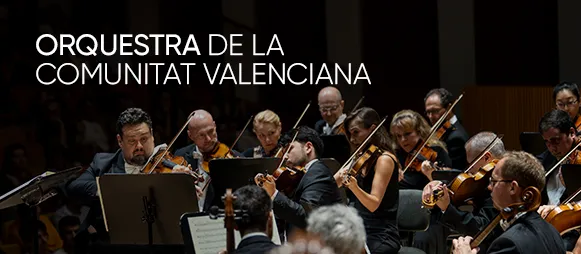
If you're passionate about classical music and want to experience the symphony of symphonies live, don't miss the performance of Beethoven's Symphony No. 9 in D minor, Op. 1, "Choral," conducted by Vasily Petrenko , principal conductor of the Royal Philharmonic Orchestra, with the Cor de la Generalitat Valenciana and the Orquesta de la Comunitat Valenciana , on June 13, 2024, at the Palau de Les Arts in Valencia. This masterpiece by Beethoven is a celebration of life and humanity, and witnessing it live is a unique opportunity you won't want to miss!

