


Les Arts premieres 'La damnation de Faust', by Berlioz, with musical direction by Roberto Abbado
14.06.2018
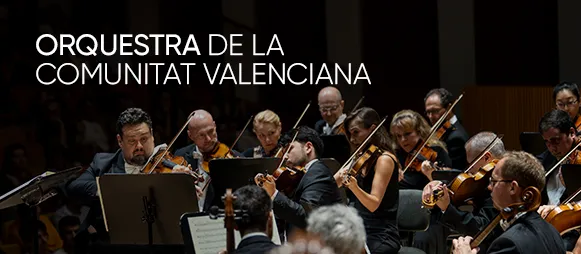
The Palau de les Arts premieres next Wednesday, June 20, a new production of 'La damnation de Faust' by Hector Berlioz, with musical direction by Roberto Abbado, in the main hall.
Singers Silvia Tro Santafé, Celso Albelo and Rubén Amoretti make up the trio of protagonists in this dramatic legend, based on Goethe's 'Faust', with Damiano Michieletto as the mastermind behind the staging.
'La damnation de Faust' is a symphonic-theatrical hybrid that represents a step forward in the transformation of the operatic model. The work explores a new dramatic model combining concert and theater, and proposes, within a symphonic framework, ballet, arias, duets, and choruses typical of stage music.
According to Roberto Abbado: “We are faced with a masterpiece that defies easy classification. It is neither an opera nor a cantata, but a score with special instrumentation where the music can soar and allow people to soar with their imagination, where sophisticated forms, such as the fugue, the double chorus, and vocal stereophony, coexist with vulgar forms. An apparent madness where everything is logical.”
“Berlioz seeks extremes to achieve his project, to portray the trajectory of Faust, where his sorrows are those of the composer himself in a work of very important psychological and biographical meaning,” the maestro continues.
Damiano Michieletto presents his third new production for Les Arts, this time co-produced with the Rome Opera and the Teatro Regio of Turin, and already hailed by Italian critics as the best show of 2017 at the Franco Abbiati Awards. This marks the second Abbiati Award in the history of Les Arts, following the 2007 awards for 'Das Rheingold' and 'Die Walküre'.
According to Eleanora Gravagnola, responsible for the revival in Valencia, the Italian director himself was inspired by Shakespeare's 'Hamlet' for the staging, which features set design by Paolo Fantin, costumes by Carla Teti, lighting by Alessandro Carletti, video creation by Roca Film, and mime movements by Chiara Vecchi.
“Although there are no references to Shakespearean drama in the show, the character of Faust is inspired by it: both experience unease, nostalgia, contemplate suicide, cannot find their place in the world… and both have the possibility that a woman, that is, love, can be a hope of salvation, but, nevertheless, they opt for self-destruction.”
Gravagnola goes on to say that “both Faust and Hamlet have visions, hallucinations, as a materialization of their own unconscious: Hamlet sees the ghost of his father and Faust sees the infernal spirit, Mephistopheles, as a symbol of evil: evil as the impossibility of finding salvation from the suffering that Faust experiences.”
From a dramaturgical point of view, the show is told from two levels: the level of everything that the public can see on the stage and a second level, through video projections, recorded or live, that brings the spectator closer to the details imperceptible from the auditorium.
The action, meanwhile, takes place in a closed stage space, which serves as Mephistopheles' laboratory, where he analyzes and examines Faust. The image stabilizer (Steadycam) on stage represents the devil's eye, which indicates, manipulates, captures, decides, projects…
Three prominent Spanish performers with international careers form the triangle around which the plot is built. Celso Albelo, one of the most sought-after tenors by the world's leading opera houses, sings the role of Faust. The Canary Islander is performing his second role at Les Arts, after singing alongside Plácido Domingo in 'Luisa Fernanda' during the 2014-2015 season.
Rubén Amoretti, a bass from Burgos who has participated this season in Verdi's 'Don Carlo', sings the role of Mephistopheles, the devil, a role he has already played in the operatic adaptations of Gounod and Arrigo Boito of the Faust myth.
The Valencian mezzo-soprano Silvia Tro Santafé completes the trio of leading roles, making her second appearance this season after singing Gluck's 'Le cinesi'. A leading voice in the Baroque and bel canto repertoire, and one of the most sought-after national artists on the operatic circuit, she brings the role of Margarita to life.
The cast is completed by baritone Jorge Eleazar Álvarez, who is completing his training this year at the Centre de Perfeccionament Plácido Domingo, and sings the role of Brander.
Along with the Cor de la Generalitat, directed by Francesc Perales, two reference children's choirs complete the large cast of voices required by Hector Berlioz's score: the Escola Coral Veus Juntes de Quart de Poblet, with Roser Gabaldó and Míriam Puchades as directors, and the Escolania de la Mare de Déu dels Desemparats, with Luis Garrido as director.
'La damnation de Faust' is the last title in the main hall of the 2017-2018 season. In addition to the premiere on the 20th, the opera house has scheduled further performances on June 20, 23, 26 and 29, and on July 1, 2018.


