



I masnadieri: opera in Valencia and the Italian mafia
01.02.2019
Opera in Valencia with I masnadieri. It may not be Verdi's most famous work, but it is the result of one of the most fruitful intellectual relationships in the history of opera. Although they never met in person, they did connect through their ideas. This is the story of Giuseppe Verdi and Friedrich von Schiller . The Italian Romantic composer based his work on the playwright's novel, and the result was the opera The Bandits , which premiered on July 22, 1847, at Her Majesty's Theatre in London.
Through four acts, this opera tells the story of Carlo , son of Count Moor, who was banished by his own father and survives by joining a band of brigands. It portrays a bandit with whom the audience empathizes, as the opera begins with his repentance and forgiveness and ends with his downfall. In between, he encounters the underhanded schemes of his brother, Francesco, who intends to seize power after their father's death. To achieve this, he resorts to repeated lies, leading his father and Carlo 's fiancée, Amalia, to believe that Carlo has died. Tragic and with a heartbreaking ending, the opera masterfully explores different stages in which power, truth, lies, betrayal, and love are the central themes. These universal themes make this opera a masterpiece , ensuring its enduring relevance.
Verdi, the story of an opera
The origins of I masnadieri date back some five years before its premiere and can be traced to Benjamin Lumley, the then-manager of Her Majesty's Theatre. His theater had become the hub of contemporary Italian opera in London and had achieved success with Verdi's earlier opera, Ernani (with a libretto by Francesco Maria Piave , based on Victor Hugo's novel of the same name ), his fifth operatic work. It was 1845, and Lumley commissioned a new opera from Verdi. It would be I masnadieri , though he didn't yet know it. It was scheduled for the following year, but Verdi was unable to undertake it due to his declining health. At that time, he was a rising star in the operatic world and would gradually establish himself as the most prominent Italian composer.
During his convalescence, his friend, the poet and translator Andrea Maffei, suggested to him the idea of adapting two works into operas: Shakespeare's Macbeth and Friedrich von Schiller's Die Räuber . Maffei's fluency in several languages led him to become the Italian translator of some of the most famous works of English and German literature. Therefore, he worked on adapting Die Räuber for the Italian libretto that Verdi would use for the opera. This was an exception in the selection of librettists, since at the time of the conception of I masnadieri , Piave was working on the libretto for Macbeth , an adaptation of Shakespeare's play that would premiere that same year at the Teatro della Pergola in Florence. This would be Verdi's tenth opera and the first time he had adapted Shakespeare.
Friedrich von Schiller and the spirit 'Sturm und Drang'
The Sturm und Drang literary movement of the second half of the 18th century promoted complete freedom of expression for artists, emphasizing subjectivism and emotion, in contrast to rationalism. Originating in Germany, it was the precursor to Romanticism , which adopted its central theme of 'tempest and passion'. This premise influenced literary works as well as those in music and painting. Among its leading figures were Goethe, Hamann, Herder, Heiser, and Schiller .
In 1781, Schiller's play * Die Räuber* (The Robbers) , considered one of the last works of the Sturm und Drang movement, was published. The play, which would later serve as the basis for the libretto Maffei wrote for Verdi's opera, was a dramatic work set in 15th-century Germany. Schiller's first work was intended as a hymn to rebellion, to the fight against injustice, to passion, and to the purest idealism, all conveyed through situations steeped in melancholy and loneliness.
This would not be the last time Verdi turned to a work by Schiller to create an opera, as he would do so again with Luisa Miller and Don Carlo . Luisa Miller premiered in 1849 at the Teatro San Carlo in Naples , a tragic melodrama in three acts based on Schiller's play Kabale und Liebe ( Intrigue and Love ) . This was adapted into an Italian libretto by Salvatore Cammarano , who, along with Piave, was one of Verdi's librettists. Don Carlo premiered at the Paris Opera in 1867 , with a French libretto by François Joseph Méry and Camille du Locle, based on Schiller's drama Dom Karlos, Infant von Spanien .
The director of the new production: Roberto Abbado
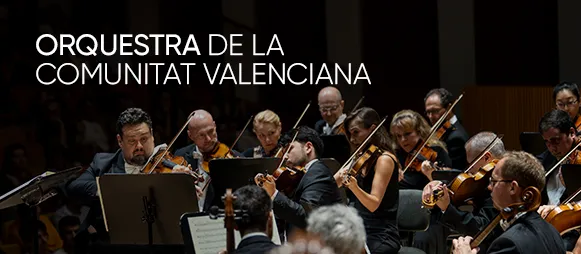
The musical direction of I masnadieri, which can be enjoyed at the Palau de les Arts Reina Sofía, is in the hands of Roberto Abbado , current principal conductor of the Orquestra de la Comunitat Valenciana. Son of the celebrated pianist and composer Marcelo Abbado, grandson of the violinist Michelangelo Abbado, and nephew of Claudio Abbado, one of the most important conductors of the 20th century. This opera can be enjoyed in Valencia as part of the 2018-2019 opera season.
The creative team includes Gabriele Lavia as stage director, Alessandro Camera for set design, and Andrea Viotti for costumes. This is a co-production of the Teatro San Carlo in Naples and the Teatro La Fenice in Venice , featuring the Orquestra de la Comunitat Valenciana and the Cor de la Generalitat Valenciana. The cast includes Stefano Secco as Carlo , Roberta Mategna as Amalia, Artur Ruciński as Francesco, Michele Pertusi as Massimiliano, and Gabriele Sagona as Father Moser.
Despite not being a frequently performed work throughout the 20th century, it is always a pleasure to experience the full grandeur of a Verdi opera live. Today's singers carry on the legacy of important figures in the operatic world from the mid-19th century. Thus, its premiere in 1847 starred Italo Gardoni (one of the most important Italian tenors of the time) in the role of Carlo and Jenny Lind (a renowned Swedish soprano) as Amalia.
Bandits and the Mafia in Opera
It could be said that *I masnadieri* focuses on the bandit's solitude, how his decision-making leads him to tragedy, and his pursuit of just ideals. Many see a parallel between these bandits of 15th-century Germany and the Italian Mafia , understood as the organized crime that emerged at the end of the 19th century and materialized in the formation of Cosa Nostra . This criminal organization, born in the Italian region of Sicily, also pursued the autonomous application of its own law, something that could be interpreted as a search for just ideals. This is deduced from their term for those who belonged to the Mafia (mafiosi), which would mean men of honor. In fact, the different clans had their own codes of honor that they had to uphold with their lives.
The entire imagery of the Italian mafia (despite this formula being replicated in countries like the US, Ireland, and the UK) is often concentrated in a single person: Al Capone . Although this gangster operated in New York during the 1920s and 30s and was born in the heart of Brooklyn, his persona has always been associated with the characteristics of the mafia. He became one of the FBI's most wanted criminals and in the 1930s ended up in Alcatraz prison. His passion for opera, and for music in general, led him to request permission to form a small band with other inmates during his time in prison. In fact, he even composed a short song for his wife, Mae, using a mandolin he had in his cell, which he called Madonna Mia. Who knows if someone will use it to write the libretto for a future opera in Valencia?
Image source: ©skeeze

